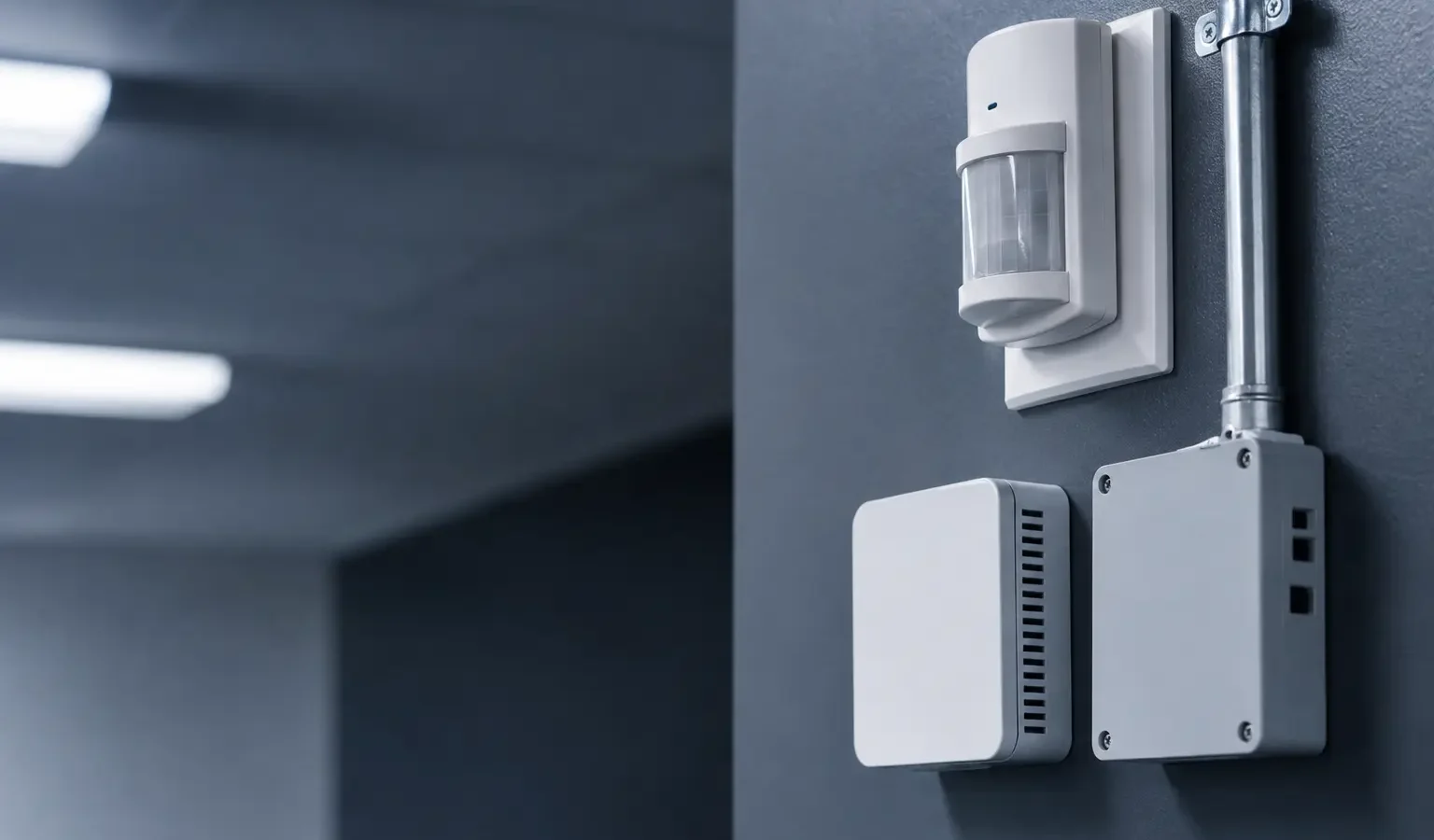
Commercial lighting controls reduce unnecessary operating time and give each facility area an intentional response to occupancy, daylight, schedules, and user needs.
Controls can be simple, such as a room vacancy sensor, or coordinated across high-bay zones, offices, exterior areas, and multiple properties. Product selection is only the beginning. Sensor coverage, mounting, zoning, timeout, dimming levels, schedules, overrides, network requirements, and commissioning determine whether the system works well.
Control problems and opportunities
A control system can waste energy or frustrate occupants when it was never commissioned for the space, when layouts changed, or when sensors and schedules no longer reflect actual use.
- Lighting that remains on in empty aisles, rooms, garages, or support areas
- Sensors that turn lights off too early or fail to detect expected movement
- Exterior lights that operate at the wrong times
- Open offices or warehouses controlled as one oversized zone
- Daylit areas that receive the same output throughout the day
- Unclear schedules, overrides, programming, or network ownership
Scope
Commercial control work can include
Controls may be added to a lighting retrofit, installed as a separate improvement, or repaired when existing behaviour is unreliable.
- Occupancy and vacancy sensors for rooms, aisles, open areas, and high ceilings
- Daylight-responsive dimming and control zones
- Time clocks, astronomical schedules, photocells, contactors, and overrides
- Fixture-level, room-level, panel-level, or networked lighting controls
- Control troubleshooting, sensor replacement, programming, and recommissioning
- Sequence-of-operation documentation and user orientation
Site-Specific Planning
Write the intended behaviour before choosing devices
A useful controls plan describes what should happen when an area is occupied, vacant, daylit, after hours, overridden, or experiencing a communication fault. It also identifies who can change settings, how critical routes are handled, and how the system will be tested after installation.
| Planning factor | Why it matters |
|---|---|
| Detection | Sensor technology, mounting height, movement type, obstructions, aisles, partitions, and traffic determine coverage. |
| Control zones | Rooms, windows, aisles, departments, parking areas, and operating schedules may need separate behaviour. |
| User experience | Timeouts, low-end levels, manual controls, overrides, fade rates, indicators, and clear instructions affect acceptance. |
| Infrastructure | Wiring, wireless conditions, gateways, networks, cybersecurity, software access, ownership, and future support affect system choice. |
How the Work Is Planned
Commission controls for the real facility
The control sequence should be designed, installed, tested, adjusted, and documented instead of being left at generic factory settings.
Observe Operation
Map occupancy, daylight, schedules, fixture zones, user complaints, existing controls, and critical areas.
Define Behaviour
Write the desired response for occupancy, vacancy, daylight, after-hours use, overrides, and special conditions.
Install and Group
Install appropriate devices, assign fixtures and areas to zones, label components, and establish access.
Commission
Test detection and schedules, adjust timeouts and levels, confirm overrides, and document final settings.
Operations
Scheduling work around the facility
Controls work may require access to rooms, ceilings, lighting circuits, panels, gateways, and network resources. Testing needs to occur under realistic occupancy and daylight conditions, and changes should be communicated so users understand the new behaviour.
Networked systems can involve facility management, IT, electrical, security, and vendor support. Ownership of credentials, licenses, backups, programming files, warranties, and future service should be clear before procurement.
Lifecycle Decisions
Energy, maintenance, and compliance considerations
Controls save energy by reducing output or operating time when full lighting is unnecessary. The impact depends on baseline hours, occupancy, daylight, zoning, settings, overrides, and user behaviour. The estimate should state assumptions and avoid double-counting savings already included in operating-hour data.
Electrical Safety Authority guidance explains that almost all electrical work in Ontario must be reported through a notification of work. The Licensed Electrical Contractor responsible for the electrical work normally handles the applicable notification and inspection process.
Related Work
Connect this service to the rest of the facility
Commercial lighting decisions often overlap. These related services and facility pages can help define a complete scope.
Frequently Asked Questions
Commercial lighting control questions
What is the difference between occupancy and vacancy sensors?
Occupancy sensors generally turn lighting on automatically when presence is detected and off after vacancy. Vacancy strategies usually require manual-on and provide automatic-off. The appropriate behaviour depends on the space, equipment, code, and user needs.
Can sensors detect movement from a high warehouse ceiling?
Yes, when devices are rated and selected for the mounting height and detection pattern. Racking, aisles, vehicles, heat sources, obstructions, and the type of movement all influence placement and commissioning.
What are networked lighting controls?
They connect fixtures, sensors, switches, schedules, and software so zones can be configured, monitored, or adjusted. The design also needs to address communications, gateways, access, data, cybersecurity, licensing, and long-term support.
Why do occupancy sensors keep turning lights off?
Potential causes include sensor position, coverage, mounting height, technology, obstructions, timeout, sensitivity, zoning, communication, or a changed room layout. Recommissioning may solve the behaviour without replacing the entire system.
Do controls qualify for incentives?
Some standard controls may receive point-of-purchase discounts, while networked lighting controls are currently listed under the Retrofit Program. Eligibility, equipment, timing, and program rules must be confirmed with the program provider.
Make the lighting respond to the way the building operates
Request a controls review for occupancy, daylight, schedules, zoning, networked systems, programming, or recurring sensor problems.
Primary Sources
Sources used for electrical, workplace, local, and incentive guidance
These primary sources support the material factual details on this page. Program information was reviewed July 24, 2026 and should be rechecked before a purchase, application, approval, or installation decision.
- Electrical Safety Authority: Notifications and InspectionsOntario guidance on notifications of work, inspections, and Licensed Electrical Contractors.
- Canadian Centre for Occupational Health and Safety: Lighting ErgonomicsWorkplace guidance on visibility, glare, shadows, contrast, task lighting, and fixture distribution.
- Save on Energy: Instant Discounts ProgramCurrent eligible lighting products, participating distributor process, customer requirements, and installation timing.
- Save on Energy: Retrofit Measures and IncentivesCurrent Retrofit lighting-control measures, custom-project information, and the June 2026 lighting-program update.