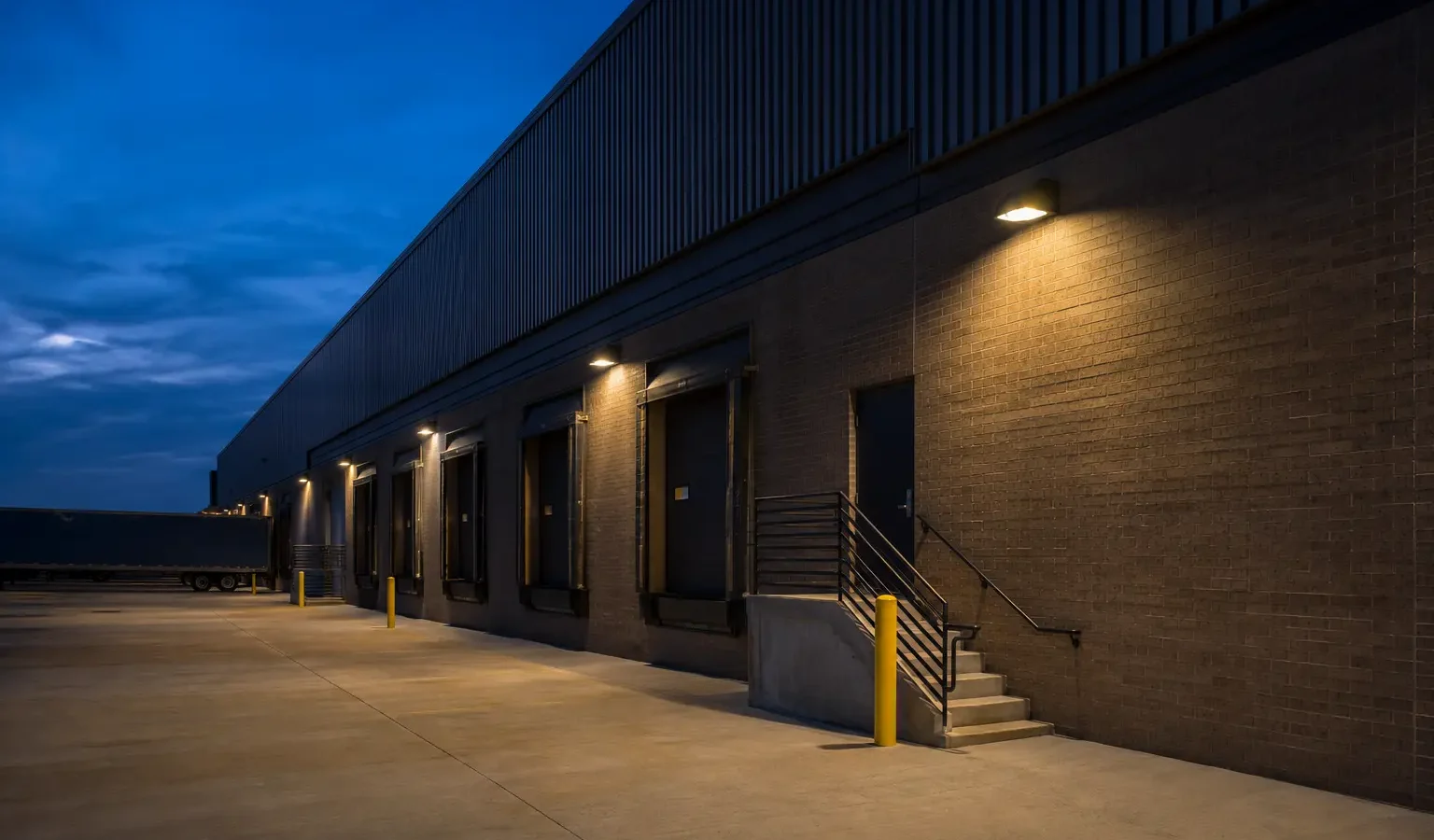
Commercial exterior lighting should improve visibility where people enter, walk, load, park, and work while directing light where it is needed.
Wall packs, canopy fixtures, dock lights, floodlights, pathway fixtures, soffit lights, photocells, and timers operate in weather and often in hard-to-reach locations. A site review connects each fixture to the area it serves and identifies failures, glare, shadows, damaged equipment, and control problems.
Exterior lighting problems around commercial buildings
Exterior issues are often interconnected. A dark loading area may come from a failed fixture, poor aiming, an obstruction, a control schedule, or a layout that changed after the lighting was installed.
- Dark entrances, service doors, pathways, docks, waste areas, or building corners
- Failed, damaged, water-affected, or discoloured exterior fixtures
- Light aimed toward neighbouring properties or uncomfortable sightlines
- Photocells, timers, contactors, or network schedules that no longer operate correctly
- Repeated maintenance on high-access wall packs or canopy fixtures
- Exterior changes, additions, or landscaping that alter coverage
Scope
Exterior lighting work can include
The scope can combine targeted repairs with planned fixture, control, and coverage improvements across the building exterior.
- LED wall packs, canopy fixtures, dock lights, floodlights, and pathway fixtures
- Lighting for entrances, exits, loading, service, perimeter, waste, and pedestrian areas
- Photocell, timer, contactor, schedule, sensor, and control troubleshooting
- Fixture aiming, shielding, distribution, and output review
- Weather-exposed wiring, connection, mounting, and component repairs
- Lift-access planning, controlled work zones, and phased exterior upgrades
Site-Specific Planning
Put light on the route and task—not everywhere
Exterior lighting should be reviewed from the viewpoint of people approaching doors, walking routes, loading vehicles, using service areas, and viewing the property from adjacent land. Direction, cutoff, mounting height, surface reflectance, building geometry, and obstructions determine whether additional output will help.
| Planning factor | Why it matters |
|---|---|
| Area purpose | Entrances, paths, docks, perimeters, stairs, waste areas, and service yards have different tasks and viewing directions. |
| Weather and wear | Moisture, temperature, corrosion, impact, insects, seals, mounting, and fixture ratings affect reliability. |
| Light direction | Optics, shielding, tilt, height, output, neighbours, roads, windows, and residential zones affect glare and spill. |
| Operating control | Photocells, timers, schedules, sensors, contactors, overrides, and seasonal daylight affect when fixtures run. |
How the Work Is Planned
Review exterior lighting in operating conditions
A complete exterior scope combines daytime equipment inspection with an understanding of night operation, access, and neighbouring conditions.
Map Exterior Zones
Identify entrances, walkways, docks, service areas, perimeters, controls, fixtures, circuits, and problem locations.
Observe Operation
Where practical, review night coverage, glare, outages, shadows, control timing, and light directed beyond the site.
Develop the Scope
Separate repairs, fixture changes, controls, access, aiming, shielding, and broader coverage concerns.
Coordinate Delivery
Plan weather, lifts, traffic, pedestrian routes, tenant access, testing, aiming, and final control settings.
Operations
Scheduling work around the facility
Exterior work is affected by daylight, weather, snow, parked vehicles, deliveries, pedestrian routes, security, and access equipment. Some testing or aiming is most informative after dark, while physical work may be completed during daylight.
A project contact should identify property boundaries, neighbouring concerns, tenant access, control locations, known circuit issues, cameras or security procedures, and areas that must remain open.
Lifecycle Decisions
Energy, maintenance, and compliance considerations
Exterior LED upgrades and corrected schedules may reduce energy and maintenance, but controls should preserve lighting during the hours and conditions when it is needed. Brampton’s property standards address exterior-light direction and upkeep; site-specific requirements should be confirmed.
Electrical Safety Authority guidance explains that almost all electrical work in Ontario must be reported through a notification of work. The Licensed Electrical Contractor responsible for the electrical work normally handles the applicable notification and inspection process.
Related Work
Connect this service to the rest of the facility
Commercial lighting decisions often overlap. These related services and facility pages can help define a complete scope.
Frequently Asked Questions
Exterior lighting questions
What is the difference between security lighting and floodlighting?
Security-oriented lighting should support visibility at specific routes, entrances, perimeters, loading, and service areas. Floodlighting describes a fixture or broad distribution; indiscriminate brightness can create glare and shadows rather than useful visibility.
Can exterior lights be aimed away from neighbouring properties?
Often, fixture selection, shielding, optics, mounting, tilt, output, and position can improve direction. The existing conditions, property boundaries, approved site plan, and applicable requirements need review.
Why do wall packs keep failing?
Possible causes include moisture, heat, drivers, connections, voltage conditions, unsuitable equipment, mounting, seals, controls, vandalism, or simple age. Replacing the same component repeatedly without diagnosis may not resolve the cause.
Can loading-dock lighting be controlled separately?
Yes, depending on circuits and the chosen control system. Docks may use schedules, photocells, occupancy detection, manual controls, or networked strategies based on operations and safe use.
Should exterior lighting be inspected during the day or night?
Both can help. Daylight is useful for equipment condition and access. Night operation reveals outages, coverage, glare, shadows, direction, and control timing.
Review the exterior from entrances to loading areas
Request an assessment for wall packs, pathways, docks, perimeters, controls, glare, damaged fixtures, or an exterior LED upgrade.