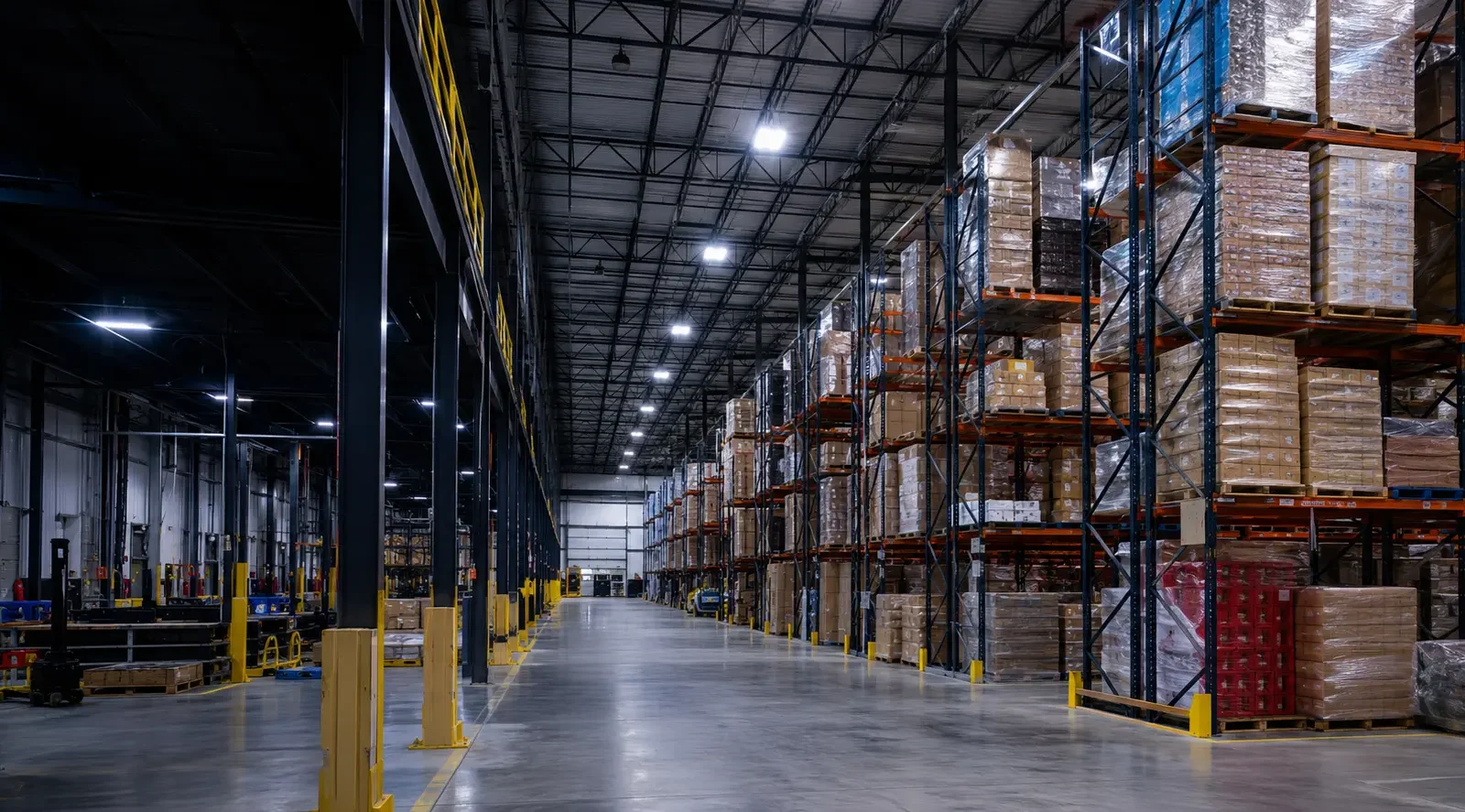
A commercial LED lighting retrofit replaces or modifies an existing lighting system to reduce energy use, improve performance, and lower maintenance demands.
A strong retrofit begins with an inventory of the current system, not a promise about percentage savings. Existing wattage, fixture condition, light distribution, operating hours, access, controls, and the way each area is used determine which upgrade options deserve consideration.
What a commercial LED retrofit can address
Legacy lighting may still operate while consuming more power, taking longer to warm up, changing colour, losing output, or creating recurring maintenance. Some early LED installations also need attention when drivers, optics, controls, or layouts no longer meet the facility’s needs.
- Fluorescent, HID, or metal-halide systems with higher connected wattage
- Frequent lamp, ballast, driver, or fixture failures
- Dark, uneven, overlit, or glare-prone areas
- High-access fixtures that make routine maintenance expensive or disruptive
- Lighting that operates longer than the occupied area requires
- Mixed fixture types, colour temperatures, and replacement histories
Scope
What retrofit planning can include
Retrofits can range from targeted replacements to a full fixture-and-controls project. The selected route should reflect equipment condition, desired performance, code and product requirements, lifecycle priorities, and incentive timing.
- Fixture and lamp inventory with existing wattage and operating hours
- Comparison of full-fixture replacement, retrofit kits, or other suitable options
- Proposed LED fixtures, optics, output, colour, and controls
- Estimated existing and proposed annual energy use when sufficient data is available
- Access equipment, disposal, phasing, shutdown, and occupied-site planning
- Review of current Ontario incentive or distributor-discount routes worth investigating
Site-Specific Planning
Savings are calculated from the actual facility
A retrofit estimate should separate connected-load reduction from control savings and avoid treating a rated wattage comparison as a guarantee. Fixture count, existing wattage, proposed wattage, annual operating hours, control strategy, electricity rate, maintenance history, and demand factors may all influence the business case.
| Planning factor | Why it matters |
|---|---|
| Existing technology | Fluorescent, HID, metal-halide, induction, and older LED systems present different replacement and compatibility questions. |
| Lighting performance | A lower-wattage product is only useful if its output, distribution, glare, colour, flicker, and controls suit the space. |
| Project economics | Equipment, labour, lifts, disposal, electrical changes, controls, incentives, operating hours, and maintenance affect the decision. |
| Program timing | Some incentives or discounts have eligibility, product, purchase-channel, pre-approval, and installation-timing rules. |
How the Work Is Planned
Build a retrofit from evidence
The objective is a defensible project scope: what exists, what will change, why the option fits, and how the work can be implemented.
Inventory
Record representative fixtures, wattages, quantities, operating schedules, controls, failures, and access conditions.
Compare Options
Evaluate suitable fixture, retrofit, optical, colour, control, and phasing approaches for each facility zone.
Estimate Impact
Calculate connected-load and annual-energy differences using stated assumptions, then review current incentive routes.
Plan Installation
Define equipment, access, scheduling, shutdowns, disposal, testing, documentation, and the written estimate.
Operations
Scheduling work around the facility
A retrofit can often be phased by floor, tenant, aisle, department, parking zone, or shift. The sequence should maintain practical lighting in occupied areas and account for lift routes, stock movement, customer access, production, and weather for exterior work.
If a current incentive route is being considered, eligibility and application or purchase timing should be reviewed before eligible equipment is ordered or work starts. Only the applicable program administrator makes final eligibility and payment decisions.
Lifecycle Decisions
Energy, maintenance, and compliance considerations
LED equipment may reduce connected load and maintenance demands, while controls can reduce unnecessary operating hours. Actual results vary. After installation, fixture schedules, control settings, and operating practices should be documented so the expected reductions can be compared with actual use.
Electrical Safety Authority guidance explains that almost all electrical work in Ontario must be reported through a notification of work. The Licensed Electrical Contractor responsible for the electrical work normally handles the applicable notification and inspection process.
Related Work
Connect this service to the rest of the facility
Commercial lighting decisions often overlap. These related services and facility pages can help define a complete scope.
Frequently Asked Questions
Commercial LED retrofit questions
How much energy can a commercial LED retrofit save?
There is no responsible universal percentage. The estimate should compare actual existing and proposed wattage, fixture quantity, annual operating hours, control effects, and electricity rates. Areas that already use efficient LED fixtures may have a different opportunity than legacy HID or fluorescent systems.
Should we replace the entire fixture or use a retrofit kit?
The answer depends on fixture condition, approvals, compatibility, optics, thermal conditions, wiring, maintenance, desired performance, labour, and warranty responsibilities. Both options should be evaluated against the actual installation.
Do we need to retrofit the whole building at once?
Not necessarily. A project can be prioritized by operating hours, maintenance cost, lighting problems, access, tenant needs, or budget. Phasing should still maintain consistent specifications and avoid making future work unnecessarily complicated.
Will an LED retrofit qualify for an incentive?
Some eligible products, controls, or projects may qualify under current Ontario programs, but not every retrofit qualifies. Program, product, purchasing channel, timing, installer, customer, and application rules determine eligibility.
Can you estimate savings without a utility bill?
A preliminary estimate can use fixture quantities, wattages, schedules, and an assumed electricity rate. Bills, interval data, operating schedules, and equipment records can make the estimate more useful and help test assumptions.
Turn your existing lighting into a retrofit plan
Request a site assessment to document the current fixtures, operating conditions, controls, problem areas, and practical LED upgrade options.
Primary Sources
Sources used for electrical, workplace, local, and incentive guidance
These primary sources support the material factual details on this page. Program information was reviewed July 24, 2026 and should be rechecked before a purchase, application, approval, or installation decision.
- Electrical Safety Authority: Notifications and InspectionsOntario guidance on notifications of work, inspections, and Licensed Electrical Contractors.
- Canadian Centre for Occupational Health and Safety: Lighting ErgonomicsWorkplace guidance on visibility, glare, shadows, contrast, task lighting, and fixture distribution.
- Save on Energy: Instant Discounts ProgramCurrent eligible lighting products, participating distributor process, customer requirements, and installation timing.
- Save on Energy: Retrofit Measures and IncentivesCurrent Retrofit lighting-control measures, custom-project information, and the June 2026 lighting-program update.