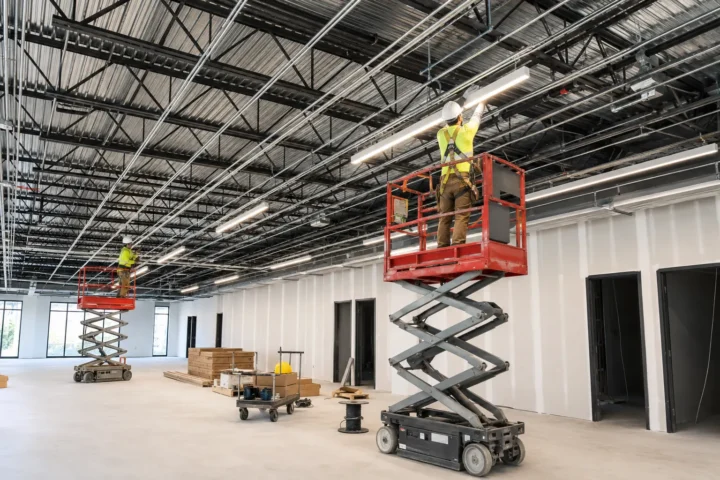
Plan a commercial LED lighting retrofit by documenting the existing system, defining the facility’s problems and priorities, comparing suitable fixture and control options, estimating impact with stated assumptions, checking incentive timing, and creating a phased installation scope.
A retrofit is not a bulk purchase of LED fixtures. It is a change to a working facility, and the plan has to connect lighting performance, energy, maintenance, access, operations, controls, procurement, and electrical requirements.
Quick planning checklist
- Map facility zones and the tasks or movement in each area
- Inventory representative fixtures, wattages, quantities, controls, failures, and hours
- Document dark areas, glare, colour inconsistency, maintenance, and access problems
- Compare full fixtures, appropriate retrofit approaches, optics, controls, and phasing
- Calculate existing and proposed energy use with visible assumptions
- Check current incentive rules before purchasing eligible equipment or starting work
- Write inclusions, exclusions, access, shutdowns, disposal, testing, and responsibilities
1. Begin with facility goals
Define the outcome before selecting equipment. The property may prioritize energy, dark areas, task visibility, reduced high-access maintenance, consistent appearance, controls, an expiring budget, a tenant project, or a combination. Rank the goals so an option is not approved merely because it has the lowest wattage or purchase price.
2. Build an existing-lighting baseline
Record enough of the current system to support the decision. Representative information may be expanded into a complete count as the estimate develops.
- Fixture, lamp, driver, ballast, mounting, voltage, control, and visible condition
- Quantities by area and representative existing wattage
- Annual hours by shift, tenant, room, aisle, exterior zone, or schedule
- Failures, maintenance history, parts availability, access equipment, and disruption
- Racking, equipment, ceilings, daylight, surface conditions, glare, shadows, and changed layouts
Utility bills can help test the overall energy context, but lighting savings still need a defensible lighting baseline.
3. Compare performance, not just wattage
A lower-wattage product is only useful when its lumen output, distribution, mounting, glare, colour temperature, colour rendering, flicker, dimming, environmental rating, approval, and control compatibility suit the application. Warehouses, offices, production tasks, retail areas, garages, parking lots, and wall packs require different comparisons.
4. Separate fixture savings from control savings
First compare existing and proposed connected load using the expected hours. Then evaluate whether occupancy, daylight, scheduling, dimming, or networked controls reduce operating time or output. Do not count the same reduced hours in both the baseline and control calculation. State timeouts, zones, low-end levels, schedules, and assumptions.
5. Plan implementation around operations
The installation plan can materially affect project cost and approval.
- Lifts, floor conditions, aisle clearance, parking, elevators, loading, and delivery
- Electrical isolation, shutdowns, temporary conditions, and active-area lighting
- Tenants, residents, employees, customers, production, inventory, security, and escorts
- After-hours work, noise, dust, weather, cleanup, testing, commissioning, and turnover
A phase should be small enough to control but large enough to avoid excessive remobilization and inconsistent equipment.
6. Check incentives before procurement
Ontario lighting programs now follow different routes. Small Business direct installs, point-of-purchase Instant Discounts, networked-control incentives, and qualifying custom projects have different rules. Confirm current eligibility, products, distributor or installer requirements, application or approval timing, and documentation with the program provider.
7. Make the written scope approval-ready
The final proposal should identify areas, quantities, equipment or performance allowances, controls, access, lifts, schedule, shutdowns, disposal, testing, warranty responsibility, electrical notifications, assumptions, exclusions, customer tasks, incentive responsibilities, price, and validity. Alternatives should be compared on the same baseline.
Questions to ask before approving the work
- What problem does each proposed fixture or control change solve?
- What existing quantities, wattages, hours, and rates were used?
- How were glare, distribution, colour, flicker, environment, and mounting considered?
- What access, shutdown, tenant, production, parking, or weather assumptions affect price?
- Who confirms incentive eligibility and who owns the application and records?
- What testing, commissioning, documentation, and remaining deficiencies are included?
Related services and facility guidance
Frequently asked questions
Should every fixture be replaced at once?
Not necessarily. Prioritize by lighting problem, energy, maintenance, operating hours, access, equipment family, renovation timing, or budget. Phases should use a coordinated specification and account for controls and future work.
Can early LED fixtures be included in a retrofit?
Yes, when their condition, failures, drivers, output, distribution, colour, controls, maintenance, energy, and compatibility no longer suit the facility. Existing LED does not automatically mean no opportunity.
How accurate is a retrofit energy estimate?
Accuracy depends on the quality of fixture counts, wattages, operating hours, control assumptions, and electricity rates. State assumptions and verify important inputs. Actual results can differ with operations and settings.
Do we need formal photometric modelling?
It depends on the facility, project risk, desired documentation, layout changes, critical tasks, and project scope. Formal modelling should only be expected when specifically included.
Primary Sources
Sources used for electrical, workplace, local, and incentive guidance
These primary sources support the material factual details on this page. Program information was reviewed July 24, 2026 and should be rechecked before a purchase, application, approval, or installation decision.
- Electrical Safety Authority: Notifications and InspectionsOntario guidance on notifications of work, inspections, and Licensed Electrical Contractors.
- Save on Energy: Instant Discounts ProgramCurrent eligible lighting products, participating distributor process, customer requirements, and installation timing.
- Save on Energy: Retrofit Measures and IncentivesCurrent Retrofit lighting-control measures, custom-project information, and the June 2026 lighting-program update.
Turn the guide into a site-specific plan
Use the facility, operating schedule, existing equipment, access, and priority areas to prepare a clear scope and written estimate.