Commercial LED retrofit cost depends on equipment, fixture quantity, existing conditions, mounting height, lifts, wiring, controls, occupied-site scheduling, shutdowns, phasing, disposal, electrical requirements, and site-specific risk.
A generic price per fixture can be misleading because two projects with the same count may require completely different access equipment, labour, electrical changes, controls, and operating coordination.
Quick planning checklist
- Fixture and control types, quantities, mounting, ratings, and product quality
- Ceiling, pole, lift, aisle, parking, elevator, roof, and loading access
- Existing wiring, circuits, supports, controls, voltage, panels, and visible condition
- Work hours, shutdowns, tenants, production, residents, customers, weather, and phasing
- Removal, recycling, ceiling repair by others, testing, commissioning, and documentation
- Applicable notifications, inspections, design, engineering, and incentive responsibilities
Equipment selection
Fixture cost varies with output, optics, glare control, colour quality, flicker performance, driver, dimming, controls, environmental rating, mounting, approvals, warranty, serviceability, and supplier support. Comparing products by wattage alone can exclude the features that make them suitable.
Access and mounting height
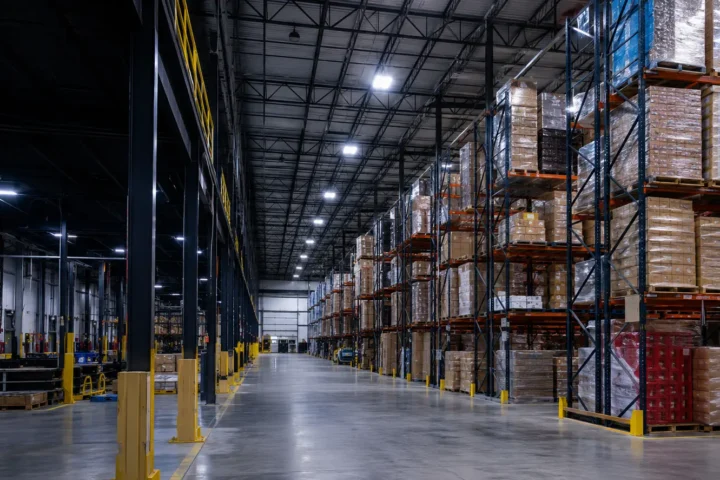
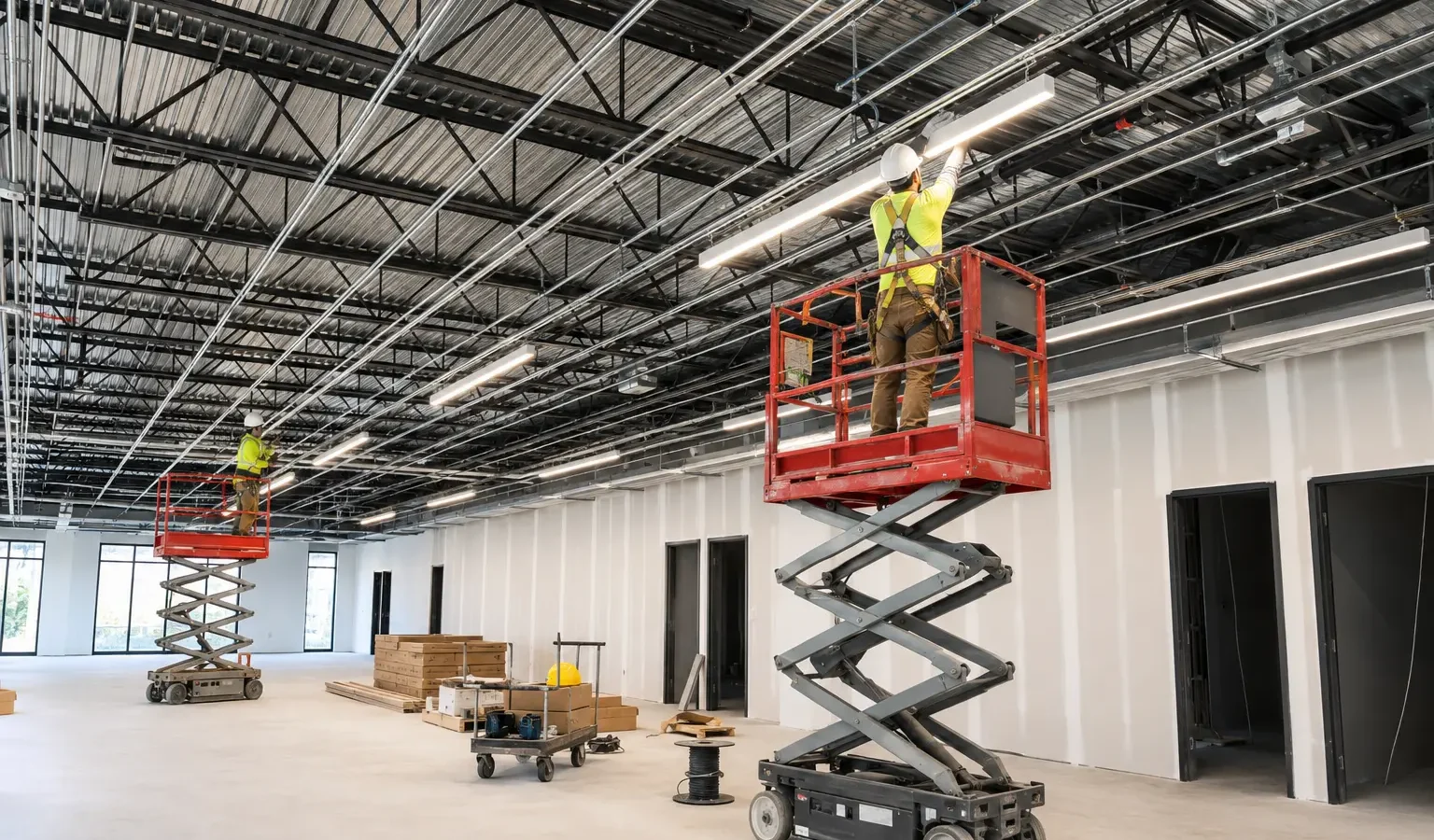
A low office ceiling, a 30-foot warehouse, a 50-foot production bay, a parking-lot pole, and an exterior wall pack require different equipment and work-zone control. Lift delivery, travel routes, floor loading, aisle clearance, parking, landscaping, overhead hazards, and weather influence labour and mobilization.
Existing electrical and fixture condition
The estimate should state assumptions about circuits, voltage, wiring, supports, junction boxes, controls, emergency circuits, panels, ceiling conditions, poles, underground feeds, and concealed conditions. Investigative work or repairs beyond fixture replacement may need allowances.
Controls and commissioning
Sensors, dimming, scheduling, daylight response, photocells, time clocks, gateways, networked controls, software, licenses, integration, programming, and commissioning add scope. They can also reduce operating time, but only when the final behaviour is tested and documented.
Operations and project schedule
After-hours work, short shifts, repeated mobilization, line shutdowns, tenant notices, security, escorts, protection, cleaning, winter conditions, parking closures, and restricted areas can change labour. A longer calendar schedule is not always more expensive; it depends on how efficiently each phase can be completed.
Disposal, records, and closeout
Removal and responsible disposal of lamps, ballasts, fixtures, batteries, and packaging should be defined. The project may also require updated fixture schedules, control settings, product information, warranty records, ESA documentation, incentive records, and deficiency closeout.
Incentives and net project cost
An incentive can affect net cost, but it should not be subtracted until eligibility, amount, timing, product, distributor, installer, customer contribution, application, and payment responsibilities are confirmed. The lighting project should still make operational sense without an assumed approval.
Questions to ask before approving the work
- Are equipment, quantities, controls, lifts, labour hours, and disposal clearly identified?
- What electrical, ceiling, pole, access, operating, and hidden-condition assumptions are being made?
- Are after-hours, shutdown, parking, tenant, security, weather, and remobilization costs included?
- What design, notification, inspection, testing, commissioning, and documentation are included?
- Is any incentive shown as confirmed, estimated, customer-managed, or excluded?
- How will changes, deficiencies, substitutions, and extra work be approved?
Related services and facility guidance
Frequently asked questions
Why can two retrofit quotes be very different?
They may include different equipment, quantities, access, lifts, controls, electrical work, hours, phasing, disposal, testing, warranties, assumptions, exclusions, and incentive treatment. Normalize the scope before comparing price.
Is full fixture replacement always more expensive than a retrofit kit?
Not always after labour, access, fixture condition, compatibility, optics, appearance, approvals, parts, warranty, and future maintenance are considered. Compare complete installed scope.
Should payback be the only approval measure?
No. Consider light performance, maintenance, reliability, controls, facility changes, access, employee or tenant impact, compliance, capital timing, and operational risk alongside energy economics.
Can cost be estimated before a site visit?
A preliminary range may be possible with reliable quantities, photos, fixture information, height, access, hours, controls, and scope. A written project estimate should confirm site assumptions.
Primary Sources
Sources used for electrical, workplace, local, and incentive guidance
These primary sources support the material factual details on this page. Program information was reviewed July 24, 2026 and should be rechecked before a purchase, application, approval, or installation decision.
- Electrical Safety Authority: Notifications and InspectionsOntario guidance on notifications of work, inspections, and Licensed Electrical Contractors.
- Save on Energy: Instant Discounts ProgramCurrent eligible lighting products, participating distributor process, customer requirements, and installation timing.
Turn the guide into a site-specific plan
Use the facility, operating schedule, existing equipment, access, and priority areas to prepare a clear scope and written estimate.